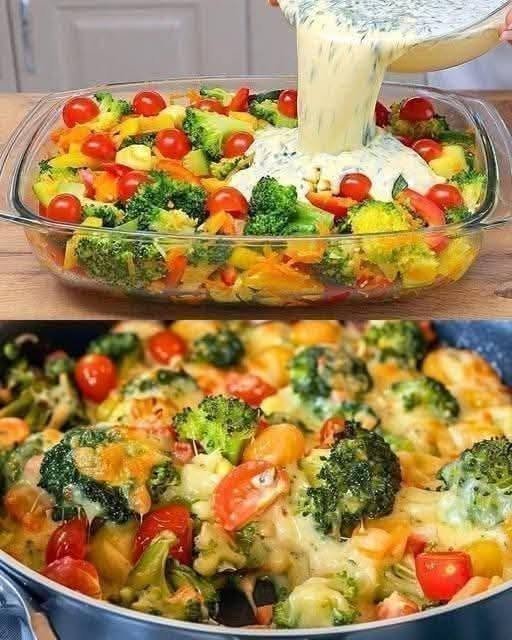
Ultimate Homemade Vegetable Casserole Recipe: Easy, Creamy, and Wholesome
Vegetable casserole is one of the most comforting and wholesome dishes you can ever make in your home kitchen. It is a hearty baked meal that brings together a rich variety of fresh vegetables, aromatic herbs, warm spices, and a creamy or savory sauce under a golden baked crust. When you make a vegetable casserole, you are essentially combining colorful plants like broccoli florets, sweet orange carrots, golden potatoes, yellow squash, bell peppers, green peas, and sweet corn into a single baking dish. These healthy ingredients slowly roast together in the warm oven until they become wonderfully tender and full of natural flavor. The true beauty of this dish lies in how humble raw ingredients can transform into something truly extraordinary and satisfying without needing complicated tools or fancy techniques. It is a timeless recipe that works perfectly for quiet family dinners, busy weeknight meals, festive holiday feasts, or casual weekend gatherings with good friends. Anyone can learn to make it because the basic preparation involves simple chopping, light mixing, and effortless baking. You do not need to be a professional chef or have years of cooking experience to create a pan of piping hot vegetable casserole that looks beautiful and tastes like warm love on a plate.
People all around the world love vegetable casserole for so many practical and emotional reasons. First of all, it is incredibly flexible and customizable based on what you have inside your refrigerator or pantry on any given day. If you have extra green beans, zucchini, mushrooms, or fresh spinach sitting in your kitchen crisper drawer, you can easily throw them into the baking dish and they will taste wonderful. Second, it is a fantastic and proven way to help children and picky eaters enjoy eating more nutritious vegetables without any complaints. The comforting combination of smooth savory sauce, melted cheese, and toasted breadcrumbs makes every single bite feel rich, warm, and satisfying rather than plain or boring. Another big reason people adore this recipe is its amazing convenience for meal preparation during busy schedules. You can assemble the whole pan ahead of time, keep it covered in your fridge, and simply bake it right before dinner time when your family gets hungry. It also reheats remarkably well, meaning you can enjoy tasty leftovers for quick lunches or simple dinners throughout your work week. It is very gentle on your budget because seasonal vegetables and pantry staples are very affordable.
There are so many wonderful moments and personal reasons to bake a warm vegetable casserole for your loved ones. On chilly winter evenings or rainy weekend afternoons, the rich aroma filling your kitchen creates an instant environment of peace, warmth, and cozy relaxation. It brings back sweet memories of traditional family dinners where everyone gathers around the dining table to share stories and enjoy a homemade meal after a long day of work or school. If you are following a healthy lifestyle, working on weight management, or trying to eat more plant based meals, this dish gives you essential vitamins, minerals, dietary fiber, and clean antioxidants your body craves without sacrificing rich flavor. It fills your belly with wholesome nutrition that keeps your daily energy levels steady and strong without heavy food comas. Whether you are bringing a warm dish to a neighborhood potluck party, celebrating a holiday gathering, caring for a friend who needs a helpful meal, or just making a quiet dinner for yourself, this recipe fits every occasion. Cooking this casserole is a true act of self care and a warm way to show genuine love to the people sitting around your table.
Furthermore, making a vegetable casserole allows you to express your creative side in the kitchen without any fear of making mistakes. You can experiment with different cheese varieties like sharp yellow cheddar, creamy white mozzarella, smooth Monterey Jack, or salty parmesan cheese, or you can keep it completely dairy free by using smooth coconut cream and savory nutritional yeast. You can also mix in cooked brown rice, fluffy quinoa, tender macaroni pasta, or cooked lentils to make the dish even more hearty and protein dense for active physical days. The pure simple joy of watching the top layer turn bubbly, brown, and delightfully crisp through the glass oven door is deeply satisfying for home cooks of all skill levels. It is a forgiving and reliable recipe that almost always turns out great, giving beginners immediate kitchen confidence while pleasing experienced eaters with its pleasant mix of textures. Every single spoonful delivers a delightful contrast between tender vegetables, velvety creamy sauce, and crunchy topping that satisfies deep hunger completely. Pulling a hot pan out of the oven filled with vibrant colors and rich aromas is a daily pleasure that makes home cooking feel fun, rewarding, and deeply fulfilling.
Ingredients You Will Need
To make this delicious and satisfying vegetable casserole at home, you will need simple, fresh, and easy to find ingredients. Here is the full list with precise quantities and units so you can prepare your shopping list with complete ease.
Fresh Vegetable Base
-
Two cups of fresh broccoli florets cut into small bite size pieces
-
Two cups of fresh cauliflower florets chopped evenly
-
One cup of sweet orange carrots sliced into thin rounds
-
One cup of red bell pepper diced into small cubes
-
One cup of yellow zucchini sliced into thin half moons
-
One cup of fresh or frozen sweet corn kernels
-
One cup of green peas fresh or frozen
-
One cup of brown button mushrooms sliced clean
-
One large yellow onion finely diced
-
Four cloves of fresh garlic minced very fine
Rich Sauce and Liquid Base
-
Two tablespoons of unsalted butter or extra virgin olive oil
-
Two tablespoons of all purpose flour or gluten free oat flour
-
One and a half cups of whole milk or unsweetened almond milk
-
Half cup of low sodium vegetable broth
-
Half cup of heavy cream or full fat coconut milk for rich texture
-
One teaspoon of sea salt or to taste
-
Half teaspoon of freshly cracked black pepper
-
One teaspoon of dried Italian herb blend
-
Half teaspoon of garlic powder
-
Half teaspoon of onion powder
-
One quarter teaspoon of ground nutmeg for warm depth
Cheesy and Crunchy Topping
-
One and a half cups of shredded sharp cheddar cheese divided
-
Half cup of grated parmesan cheese
-
One cup of plain breadcrumbs or crushed cornflakes
-
Two tablespoons of melted butter mixed into the breadcrumbs
-
Two tablespoons of fresh parsley finely chopped for final garnish
Step by Step Method
Preparing a home cooked vegetable casserole is very easy when you follow these clear, simple steps. Even if this is your very first time cooking in a kitchen, these detailed guidelines will help you achieve perfect results every time.
Step One: Preparing Your Work Area and Oven
Before you start touching any food ingredients, make sure your kitchen counter is clean and clear of clutter. Preheat your kitchen oven to 375 degrees Fahrenheit or 190 degrees Celsius. Preheating ensures that your casserole bakes evenly from the moment you put it inside. Next, take a standard 9 by 13 inch baking dish and lightly grease the inside bottom and sides with a small amount of butter or olive oil. Set the prepared baking dish aside on your counter.
Step Two: Chopping and Prepping Vegetables
Take your fresh vegetables and wash them thoroughly under cold running tap water. Pat them dry with a clean kitchen towel. Using a sharp knife on a secure cutting board, chop your broccoli and cauliflower into small, uniform florets so they cook at the exact same speed. Slice your carrots into thin rounds. Dice the yellow onion into tiny pieces and finely mince your fresh garlic cloves. Chop your bell pepper into neat cubes and slice the button mushrooms cleanly. Having all your vegetables chopped to similar small sizes guarantees that every bite of your final dish will have a pleasant, balanced texture.
Step Three: Parboiling the Hard Vegetables
Hard vegetables like carrots, broccoli, and cauliflower take longer to cook than soft vegetables like zucchini or peas. To make sure all your vegetables reach perfect tenderness without getting mushy, you should blanch or parboil the hard ones first. Bring a large pot of salted water to a rolling boil over high heat on your stovetop. Carefully add the sliced carrots, broccoli florets, and cauliflower florets to the boiling water. Let them cook for just three to four minutes until their colors brighten and they are slightly softened but still crisp. Drain the hot water immediately and transfer the cooked vegetables into a bowl filled with ice cold water to stop the cooking process. Drain them well after two minutes and set aside.
Step Four: Sautéing Aromatics and Soft Vegetables
Place a large skillet or pan on your stovetop over medium heat. Add two tablespoons of unsalted butter or olive oil and let it warm up. Add the diced yellow onion to the hot pan and cook for about three to four minutes until the onion becomes soft and translucent. Next, add the minced garlic and sliced button mushrooms. Stir continuously for two minutes until the garlic becomes delightfully fragrant and the mushrooms soften slightly. Add the diced bell pepper, yellow zucchini, green peas, and sweet corn. Cook all together for another three minutes. Turn off the burner heat and transfer these cooked vegetables into a large mixing bowl along with your parboiled broccoli, cauliflower, and carrots.
Step Five: Making the Creamy White Sauce
In the same skillet over medium heat, melt two tablespoons of butter. Sprinkle two tablespoons of all purpose flour over the melted butter. Whisk constantly for about one to two minutes to create a smooth paste called a roux. This step removes the raw taste of the flour. Slowly pour in one and a half cups of milk and half cup of vegetable broth while whisking continuously to prevent any lumps from forming. Reduce the stovetop heat to low and let the mixture simmer gently for three to five minutes until it thickens into a rich white sauce that coats the back of a spoon smoothly. Stir in the heavy cream or coconut milk, sea salt, black pepper, Italian herb blend, garlic powder, onion powder, and ground nutmeg. Remove the pan from heat and stir in one cup of shredded sharp cheddar cheese until it melts completely into the warm sauce.
Step Six: Combining Vegetables and Sauce
Pour the warm cheesy white sauce over the big bowl of prepped vegetables. Use a large wooden spoon or silicone spatula to gently fold everything together until every vegetable piece is evenly coated in sauce. Taste a tiny piece of vegetable and adjust the salt or black pepper if you feel it needs a little more flavor.
Step Seven: Assembling the Casserole
Pour the mixed vegetable and sauce mixture into your greased 9 by 13 inch baking dish. Use your spatula to spread the mixture evenly into all four corners, flattening the top surface gently. Sprinkle the remaining half cup of shredded cheddar cheese and half cup of parmesan cheese evenly over the entire top. In a small bowl, combine one cup of breadcrumbs with two tablespoons of melted butter, then sprinkle this breadcrumb mixture over the cheese layer. This will create a crisp, golden crust while baking.
Step Eight: Baking to Perfection
Carefully place the uncovered baking dish onto the center rack of your preheated oven. Bake at 375 degrees Fahrenheit for 25 to 30 minutes. You will know your casserole is ready when the sauce is visibly bubbling around the edges, the top breadcrumb layer turns a gorgeous golden brown color, and the vegetables are tender when pierced with a fork. If the top starts browning too fast before 20 minutes, loosely lay a sheet of aluminum foil over the top.
Step Nine: Resting and Serving
Once baking is complete, carefully remove the hot baking dish from your oven using thick oven mitts. Set the pan on a heat proof pad or trivet on your kitchen counter. Allow the casserole to rest quietly for 10 to 15 minutes before serving. Resting allows the rich creamy sauce to settle and thicken slightly, making it much easier to scoop out neat portions without the casserole running all over the plate. Garnish with freshly chopped green parsley and serve warm to your eager family and friends.
Why This Recipe Is Special
This vegetable casserole recipe holds a special place in any home cook’s collection because it offers extraordinary health benefits, exceptional flavor harmony, and remarkable simplicity.
First, let us look at the nutritional power packed inside this single pan. Vegetables are naturally filled with essential daily nutrients that keep your body functioning at its absolute best. Broccoli and cauliflower provide high amounts of Vitamin C and Vitamin K, which strengthen your immune system and keep your bones strong. Carrots are rich in beta carotene, an essential antioxidant that supports healthy eyesight and vibrant skin. Green peas and corn add natural plant protein and energetic complex carbohydrates that give your body sustained strength without quick blood sugar crashes. The high amount of natural dietary fiber present in all these mixed vegetables aids smooth digestion, promotes healthy gut bacterial balance, and keeps you feeling pleasantly full for hours after finishing your meal.
Second, the flavor profile of this dish is crafted to perfection. Many people assume vegetable dishes taste boring or dry, but this recipe changes that completely. The secret lies in pairing earthy, fresh plant flavors with a rich, velvety cheese sauce and a crispy, buttery crust. The slight natural sweetness of roasted carrots and corn balances beautifully against the savory notes of garlic, onions, and melted cheddar cheese. The addition of aromatic Italian herbs and warm ground nutmeg adds a sophisticated depth of flavor that makes every bite taste like it came from a fine restaurant.
Third, this recipe is wonderfully inclusive for different dietary requirements. It can easily adapt to vegetarian, gluten free, or dairy free eating plans with minimal adjustments. You can swap standard wheat flour for gluten free flour, use dairy free plant milks and vegan cheese, or boost the protein content by adding cooked beans, chickpeas, or quinoa. It is a unifying recipe that brings people of all dietary preferences together around one shared dining table.
Extra Tips for Better Taste
If you want to take your vegetable casserole from delicious to absolute perfection, here are several creative and professional cooking tips that will elevate your dish.
-
Roasting Vegetables for Extra Depth of Flavor: Instead of just parboiling your vegetables in water, try roasting your broccoli, cauliflower, and carrots on a baking sheet with a tiny drizzle of olive oil at 400 degrees Fahrenheit for 15 minutes before mixing them with sauce. Roasting caramelizes the natural sugars inside the vegetables, creating a deep, smoky sweetness that takes the dish to a whole new culinary level.
-
Experimenting with Custom Cheese Blends: Do not feel limited to just cheddar cheese. You can mix in smoked provolone for a rich smoky aroma, fontina cheese for unbelievable creamy melting action, or aged Gruyere cheese for a sophisticated nutty flavor. Combining two or three different cheeses creates a far more complex and luxurious sauce.
-
Creating the Ultimate Crunchy Crust: While plain breadcrumbs work great, you can make your topping extra exciting. Try crushing garlic flavored croutons, buttery Ritz crackers, or crispy French fried onions to scatter over the top of the casserole during the last 10 minutes of baking. This provides an amazing textural contrast between the soft creamy interior and the crunchy exterior.
-
Adding Protein Boosters: If you want to transform this vegetable dish into a complete protein packed single pan meal for main course dining, consider adding cooked black beans, cooked chickpeas, diced firm tofu, or cooked lentils into the vegetable mixture. If your family eats meat, cooked shredded chicken, diced ham, or crispy bacon bits make wonderful additions.
-
Preventing Watery Casseroles: One common mistake beginners make is adding watery vegetables directly into the baking pan. High water vegetables like zucchini, mushrooms, and spinach release liquid while baking, which can make your sauce runny. Always sauté or drain high moisture vegetables first to remove excess water before combining them with your white sauce.
-
Layering Fresh Herbs: While dried Italian herbs are great in the sauce, adding fresh herbs right before serving makes a huge visual and flavor difference. Chopped fresh basil, fresh chives, fresh thyme leaves, or green dill scattered on top add bright color notes and a clean, refreshing aroma.
Final Thoughts
Baking a homemade vegetable casserole is one of the most rewarding and satisfying experiences you can enjoy in your kitchen. It turns simple, humble plant ingredients into a golden, bubbling masterpiece of comfort food that nourishes your body while delighting your taste buds. Whether you are cooking for a family weeknight dinner, hosting friends for a cozy gathering, or meal prepping for a busy week ahead, this versatile dish will never disappoint you. It proves that eating your daily vegetables can be pure joy rather than a chore. So grab your cutting board, gather your favorite fresh vegetables, preheat your oven, and enjoy the wonderful process of creating this wholesome home baked feast today!
Nutrition Details
Here is the approximate nutritional breakdown for this complete vegetable casserole recipe as well as per individual serving based on eight equal servings. These values are helpful estimates for planning your daily nutrient intake.
Nutritional Breakdown Table
Disclaimer
The nutritional values and health information provided in this article are calculated as general guidelines and estimates only. Actual nutritional content may vary depending on the exact brands, specific quantities, fresh vegetable moisture content, and ingredient substitutions used in your personal kitchen. Everyone has unique dietary needs, biological responses, allergies, and health goals. If you have specific medical conditions, food allergies, or special dietary requirements, please consult a qualified healthcare professional or a registered dietitian before making significant changes to your regular meal routine.